What to Expect During a Roof Inspection
Understanding what happens during a roof inspection helps you make informed decisions about one of your home’s most important investments. Professional inspectors assess your roof from the ground first, then climb up to examine the materials up close. They also check your attic to inspect the roof system from underneath. After the inspection, you will receive a report detailing what they found.
Let’s walk through each stage, so you know exactly what to expect.
The 3 Stages of a Professional Roof Inspection Process
To prepare for a roof inspection, you should understand the stages that inspectors go through to gain a complete picture of your roof’s condition. Inspectors conduct the following assessments:
- Ground-level: Inspectors walk around your property to examine your roofline, gutters, and the areas where your roof meets the rest of your house. This stage identifies large-scale issues like sagging, missing shingles, or clogged gutters.
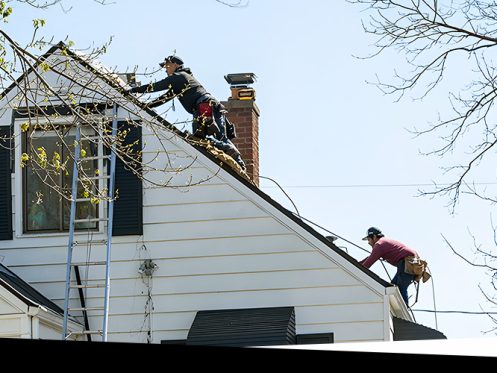
- On-roof: Inspectors climb onto your roof to examine shingles, flashing, seals, and other materials up close. They check for cracking, curling, missing granules, and damage around chimneys, vents, and skylights where leaks commonly start.
- Interior: Inspectors will access your attic if necessary to examine structural supports and insulation to spot problems that are not visible from outside. They’ll also look for water stains, moisture buildup, mold, and ventilation issues.
What Do Roof Inspectors Look for? 4 Key Points of Evaluation
Professional inspectors focus on four areas to identify potential problems and determine whether your roof needs maintenance, replacement, or repairs.
1. Weather Damage
Your roof is constantly exposed to weather conditions that can cause various types of damage over time. Inspectors check for signs of wear from:
- Wind damage: Even low wind speeds can lift shingle edges, tear away sections of roofing, or loosen the flashing around vents and chimneys. They might also blow debris onto your roof, causing punctures or dents. These risks are heightened during Ohio’s tornado season, which peaks between April and June. Inspectors look for these issues, along with raised, shifted, or missing shingles, and verify that all components remain securely fastened to protect your home.
- Rain damage: Water is one of the biggest threats to your roof because it finds and exploits any weak point in your system — and with Columbus averaging 37 inches of rain each year, it can put a strain on your roof. Valleys, where two roof slopes meet, and areas around chimneys or skylights are particularly vulnerable. Inspectors examine these high-risk areas for pooling water that indicates drainage issues and water stains or soft spots that signal leaks.
- Snow damage: Heavy snow accumulation puts significant weight on your roof, and the freeze-thaw cycles that follow create ice dams along the edges. These ice dams prevent melting snow from draining properly and forcing water to back up under your shingles.
- Hail damage: Hail can occur in colder or warmer months. Unlike other weather damage that develops over time, it can compromise your roof in minutes during a single storm. The impact creates dents or bruises that knock off the granules protecting your shingles and expose the underlying material to accelerated wear. Many homeowners don’t notice this damage until leaks appear.
- UV damage: Your roof endures direct sunlight every day. Over years, that constant exposure breaks down the materials. Inspectors assess UV-related aging by looking for widespread cracking and checking if the shingles have lost flexibility. UV damage usually calls for shingle roofing repair services.
2. Moisture Intrusion
Water penetration causes serious structural damage, and inspectors focus on finding any evidence that moisture has entered your system. They examine areas that are most vulnerable to leaks, such as:
- Roof valleys: These are the V-shaped channels where two sections of your roof meet at an angle. Inspectors look for cracks or gaps in the sealant that allow water to seep under the shingles. Even minor leaks can rot the wooden deck and spread to your home’s framing.
- Chimneys and vent pipes: Metal flashing seals the space between these structures and your shingles. If your flashing has rusted through, pulled away, or developed cracks, water runs down inside your walls. Besides looking for signs of failure, inspectors may lift adjacent shingles to verify that the flashing remains properly layered underneath.
- Skylights: These windows installed in your roof bring natural light into your home, but require careful sealing to prevent leaks. Common problems include cracked or hardened rubber seals and flashing that has separated or corroded. Condensation trapped inside the glass also signals seal failure.
- Roof edges and gutters: The lower edge of your roof channels water into gutters that carry it safely away from your home. When gutters clog, water backs up and can seep under the shingles. This causes the wooden boards along the edge to rot. During an inspection, water stains on these boards indicate drainage problems.
3. Structural Integrity Issues
Your roof’s structure needs to support its own weight plus snow, wind, and the weight of workers during repairs. Inspectors evaluate whether the framework remains strong and stable. They look for sagging areas that suggest weakened support beams. From inside your attic, they examine the beams and supports for cracks, splits, or signs of bending under load.

Water damage often compromises the structural integrity of your home before you notice problems inside. Soft or spongy spots when walking on the roof are telltale signs that the deck underneath has rotted. Structural issues affect your roof’s ability to protect your home and can worsen quickly once the framework begins to fail.
4. Compliance With Building Codes
Roofing installations are governed by specific standards. Those outlined in Chapter 9 of the International Residential Code establish standards for materials, installation methods, fire resistance, and structural adequacy to ensure roofs perform safely.
Local jurisdictions often adopt these with additional requirements based on regional weather patterns. For example, in Columbus, the 2024 Ohio Building Code recommends installing an ice barrier to prevent damage from ice dams.
Inspectors verify that your roof was installed in accordance with code requirements at the time of construction. They check that materials meet minimum standards and that flashing is correctly placed around all penetrations. If previous repairs or modifications were made, inspectors also assess whether that work complied with code.
Understanding Your Next Steps After the Inspection
Following the inspection, you will receive a detailed report that includes:
- Your inspector documents what they found with images showing different areas of your roof.
- Each issue is explained in plain language, and the inspector will walk you through the report and answer any questions you may have.
- Issues are ordered by urgency so you can address the most critical ones first.
- Your inspector provides specific steps you can take to extend your roof’s lifespan.
The report will indicate whether you need roof repairs, should plan for a replacement, or require assistance with an insurance claim for storm damage.
Learn the Truth About Your Roof
You might be researching roof inspections because you are ready to hire, or you might have already had an inspection done and are checking whether it met expectations. Either way, you are looking for confidence in the decisions ahead.
Our inspections give you that confidence. The Roof Detective is a BBB-accredited, family-owned company that has built its reputation on transparency and honest assessments. We’re also members of the Board of Columbus. Call us at (614) 500-9005 and use the code ‘SHINGAL’ to schedule a time for our team to drop by and evaluate your roof at no cost. You can also contact us online.